


Many companies know data is important yet many still struggle to convert data into strategy. According to a 2023 global survey of business analytics, about 91.9% of organizations that invest in data & analytics report measurable value from those investments. Still, other reports estimate that only about 20% of companies have consolidated a truly effective data strategy, with the remaining 80% often collecting data but lacking a cohesive plan for collection, storage, analysis and use. That gap between data potential and data execution is exactly where many strategies fail before they even begin.
If you want to close that gap and build strategy anchored in evidence (not guesswork), here’s a 5-step roadmap to implement a genuinely data-driven business strategy:
1. What are you going to measure?
Don’t just aim at vague goals define a specific metric that matters: customer-churn rate, monthly repeat purchases per client, time-to-delivery, inventory turnover, defect rate, net promoter score, or any KPI that directly links to business value. This metric should be the target that your model (whether regression, classification or other) will predict or monitor and you should already know what decisions you’ll take using it.

Why this matters and what firms that succeed are doing
-
The global big-data analytics market is growing rapidly: valued at about USD 307.5 billion in 2023, with projections showing a rise to nearly USD 961.9 billion by 2032.
-
Among firms investing in data & analytics in 2023, nearly 92% obtained measurable business value, indicating that returns are real and wide-ranging when data is used properly.
-
But despite that potential, many companies still lag: only ~20% have a consolidated data strategy and governance, meaning 4 out of 5 operate without a coordinated data plan which dampens impact and leads to wasted opportunity.
In a world where markets, customer behavior and competition shift fast, relying on intuition or isolated reports is a risk. A robust data-driven strategy with clear metrics, good data collection, adaptive input levers, monitoring loops and organizational buy-in doesn’t just improve decision-making. It transforms decision-making into evidence-based execution.
Companies that adopt this mindset don’t just survive disruption they harness it. And in uncertain, volatile environments, that difference can define leadership vs. stagnation.
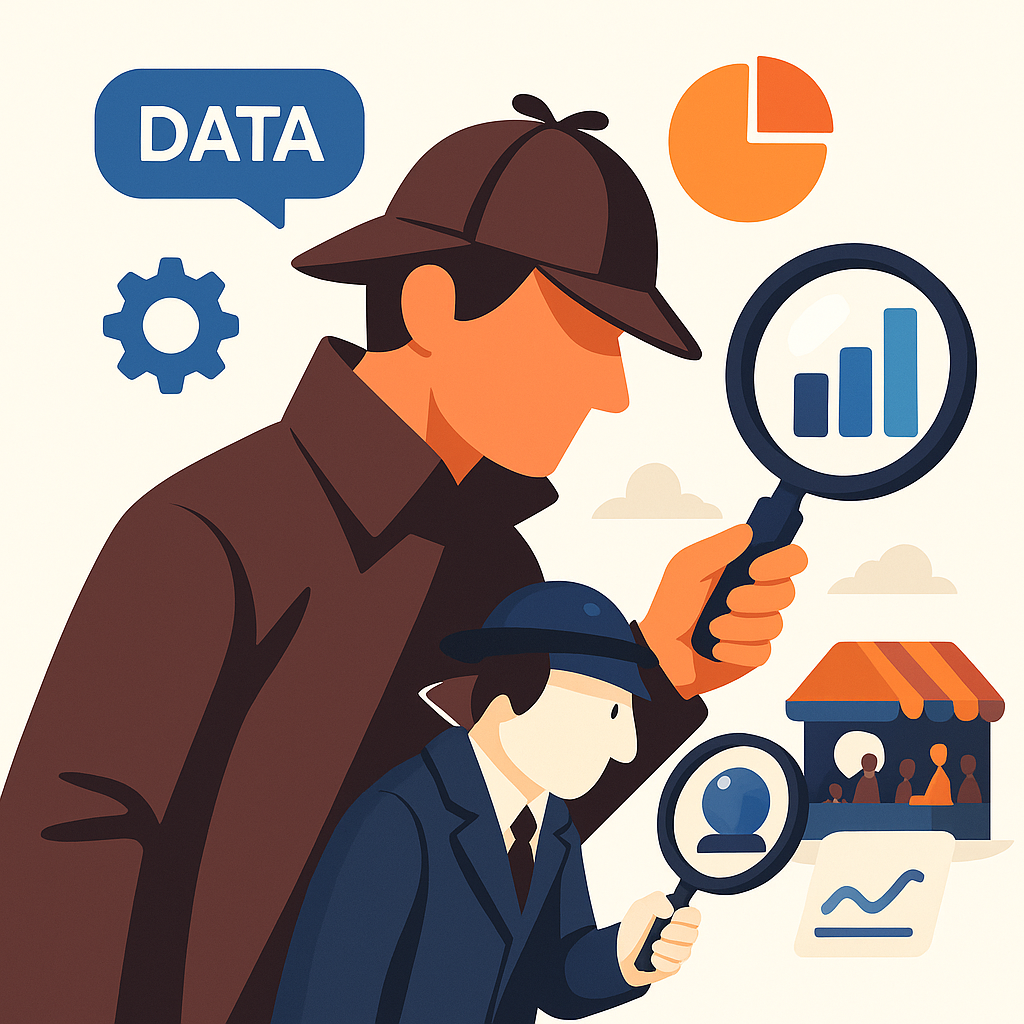

2. How will you measure it?
Data quality depends heavily on collection and process. Poor collection methods — manual spreadsheets, inconsistent entries, messy transfer from paper to digital — quickly degrade the value of data. On the other hand, robust processes, consistent database entries, automated logging, correct timestamping and validation rules improve data reliability and make advanced analytics possible. Think of it as the difference between a blurry snapshot and a high-definition video: the clarity changes everything.
3. How will you adjust it?
Every “outcome” metric (sales volume, margin, retention, defect rate, churn…) usually depends on one or more “input” variables such as promotional spend, operational changes, product updates, channel mix, marketing efforts, price adjustments, etc. Your strategy must allow for these inputs to be adjusted periodically, so that the business “sails” through market fluctuations, seasonality, customer behavior shifts, or external changes.
Your strategy must allow for these inputs to be adjusted periodically, so that the business “sails” through market fluctuations, seasonality, customer behavior shifts, or external changes.
4. How will you validate and continuously monitor results?
Data-driven strategy is not a one-time project: it’s a continuous feedback loop. Once the metric and measurement pipelines are in place, you need regular monitoring of results, hypothesis testing, re-training (if you use ML), checking data drift, monitoring KPIs, and updating your assumptions. This turns strategy into a living mechanism, responsive, adaptive, measurable.
5. How will you embed data culture across the organization?
Even the best metrics and models fail if data remains siloed or stakeholders don’t trust the insights. Building a data-driven business means investing in data literacy, governance, clear ownership, shared understanding of metrics, and aligning decisions with data — not opinions. Without this cultural and organizational embedding, analytics becomes a siloed experiment instead of a strategic asset.
Why this matters and what firms that succeed are doing
-
The global big-data analytics market is growing rapidly: valued at about USD 307.5 billion in 2023, with projections showing a rise to nearly USD 961.9 billion by 2032.
-
Among firms investing in data & analytics in 2023, nearly 92% obtained measurable business value, indicating that returns are real and wide-ranging when data is used properly.
-
But despite that potential, many companies still lag: only ~20% have a consolidated data strategy and governance, meaning 4 out of 5 operate without a coordinated data plan which dampens impact and leads to wasted opportunity.
In a world where markets, customer behavior and competition shift fast, relying on intuition or isolated reports is a risk. A robust data-driven strategy with clear metrics, good data collection, adaptive input levers, monitoring loops and organizational buy-in doesn’t just improve decision-making. It transforms decision-making into evidence-based execution.
Companies that adopt this mindset don’t just survive disruption they harness it. And in uncertain, volatile environments, that difference can define leadership vs. stagnation.


3 Comments
b"asta binance h"anvisningskod
Can you be more specific about the content of your article? After reading it, I still have some doubts. Hope you can help me.
创建个人账户
Thank you for your sharing. I am worried that I lack creative ideas. It is your article that makes me full of hope. Thank you. But, I have a question, can you help me?
binance US-registrera
Thanks for sharing. I read many of your blog posts, cool, your blog is very good.